Nervous system function
The nervous system is the master controlling and communicating system of the body. It gathers information about what is occurring inside and outside the body. It then processes this information and makes decisions about what should be done moment by moment, ensuring that the appropriate responses occur to the various stimuli.
The parts of the nervous system
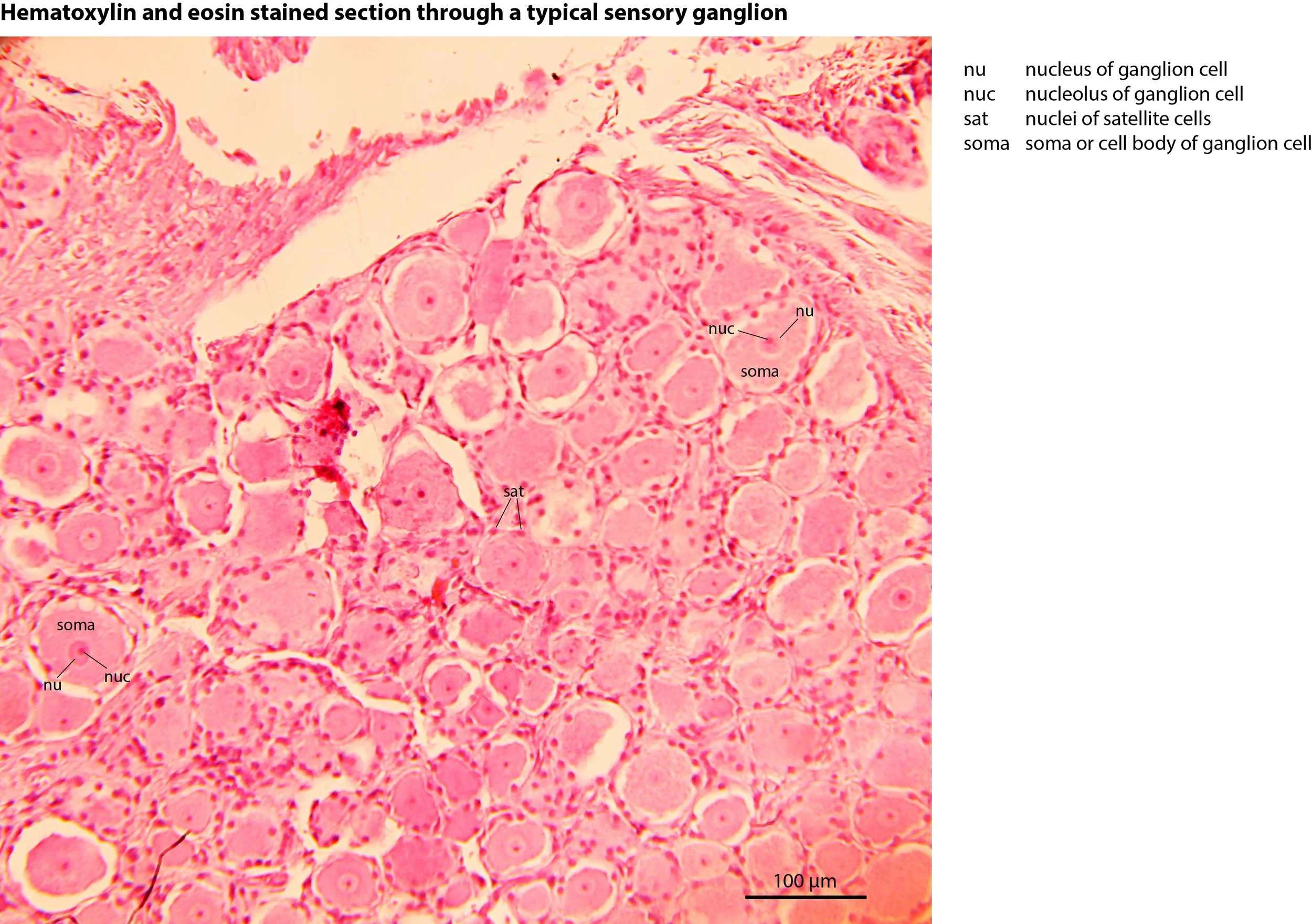
The nervous system is divided into central and peripheral parts. The central nervous system (CNS) comprises the brain and spinal cord and functions to interpret incoming information and to issue instructions. The peripheral nervous system (PNS) comprises the peripheral nerves (bundles of nerve fibres), ganglia (clumps of neurons outside the CNS) and sensory receptors. It functions to carry information to and from the brain and spinal cord.
Microscopic structure of a typical CNS neuron
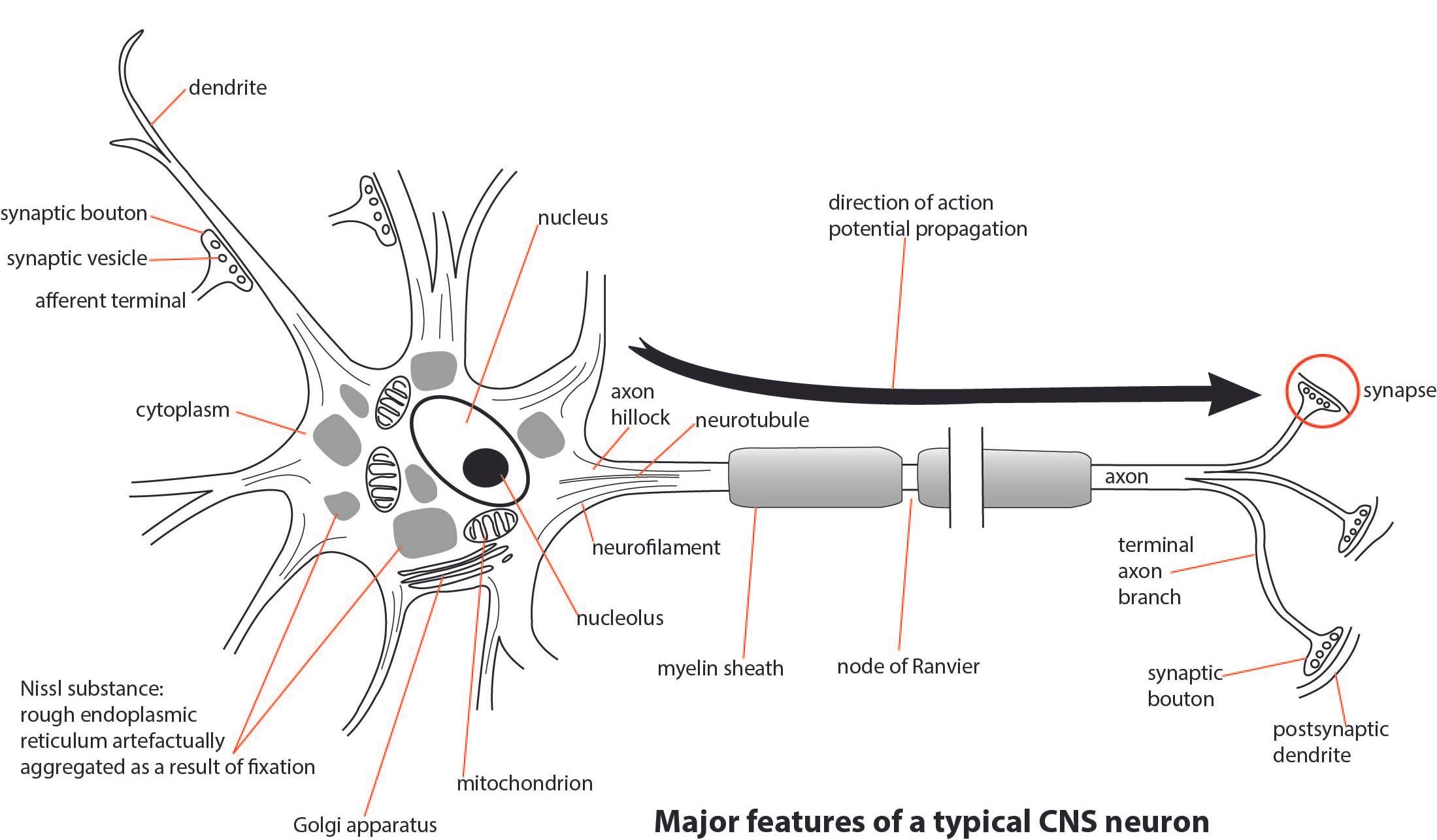
The functional unit of the nervous system is the neuron, a cell which has the properties of irritability and conductivity i.e. it is sensitive to stimuli (mechanical, thermal or chemical) and able to conduct messages from one place to another.
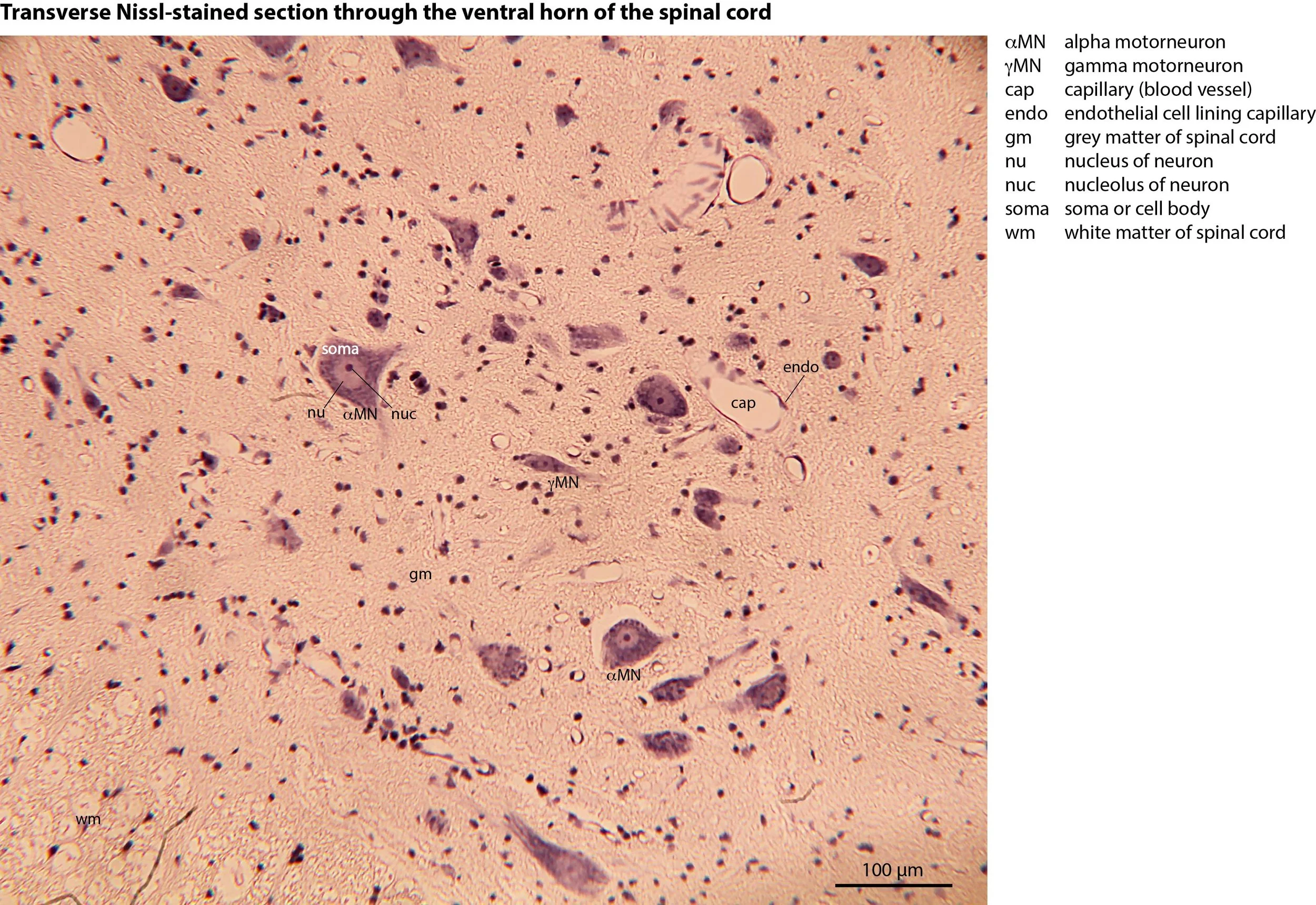
A typical neuron has a cell body or soma (plural – somata), which contains a nucleus and surrounding cytoplasm. The nucleus contains the genetic information (DNA) responsible for directing the metabolic activity of the neuron. Neurons often have a well-developed nucleolus, which directs manufacture of the messenger RNA which controls protein synthesis.
The surrounding cytoplasm contains all the chemical machinery to produce usable energy for the neurons, manufacture proteins and chemical messengers and package these substances ready for transport to distant parts of the cell. Energy is produced in mitochondria, proteins are produced by rough endoplasmic reticulum and materials are packaged in the Golgi apparatus.
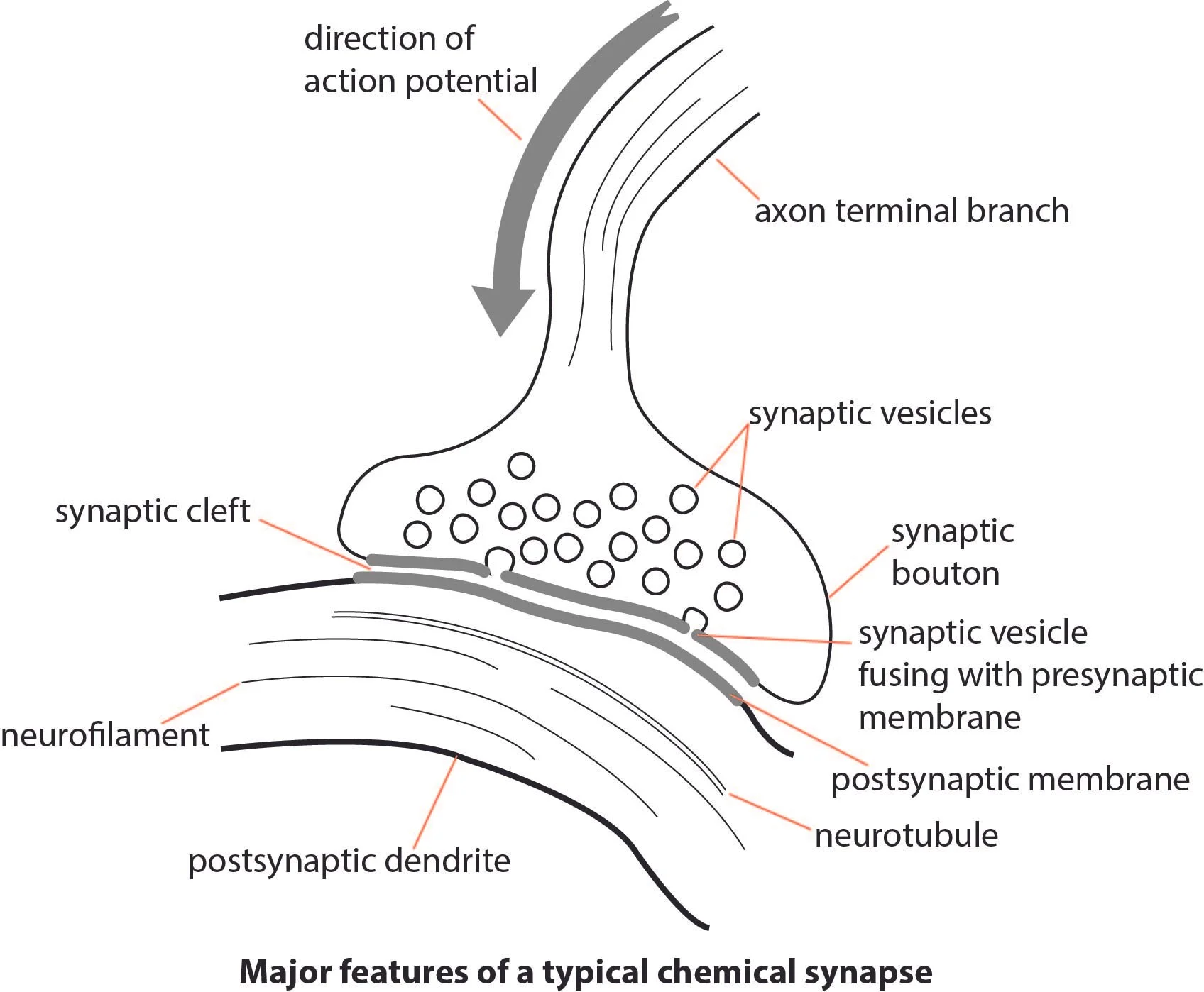
Typical neurons have a widely branching dendritic tree, which consists of fine processes extending for up to several millimetres in some cases. This dendritic tree receives information from other nerve cells, usually by chemical synapses, where special chemicals (neurotransmitters) are released onto discrete areas of the surface of the dendrite. The dendritic tree carries electrical impulses towards the soma of the neuron. Emerging from the soma there is also usually a fine process known as the axon, which may extend for distances from a few tenths of a millimetre to almost a metre in the case of some nerve cells with axons which run down the spinal cord. Axons of many neurons are ensheathed in a special fatty substance called myelin (myelin sheath), which makes the electrical transmission of impulses down the axon both faster and more reliable. Within the axon and some parts of the soma there is a network of strands known as neurofilaments, which provide the skeleton of the neuron. Neurotubules, as the name implies, are tubular structures which provide a transport system along the length of the axon. The end of the axon may be widely branched so that one neuron can make contact with many other neurons. The very end of each axon (axon terminal) may end in fine button-like processes (terminal boutons) which are the sites of direct contact with dendritic trees, soma or even other axons of other neurons.